
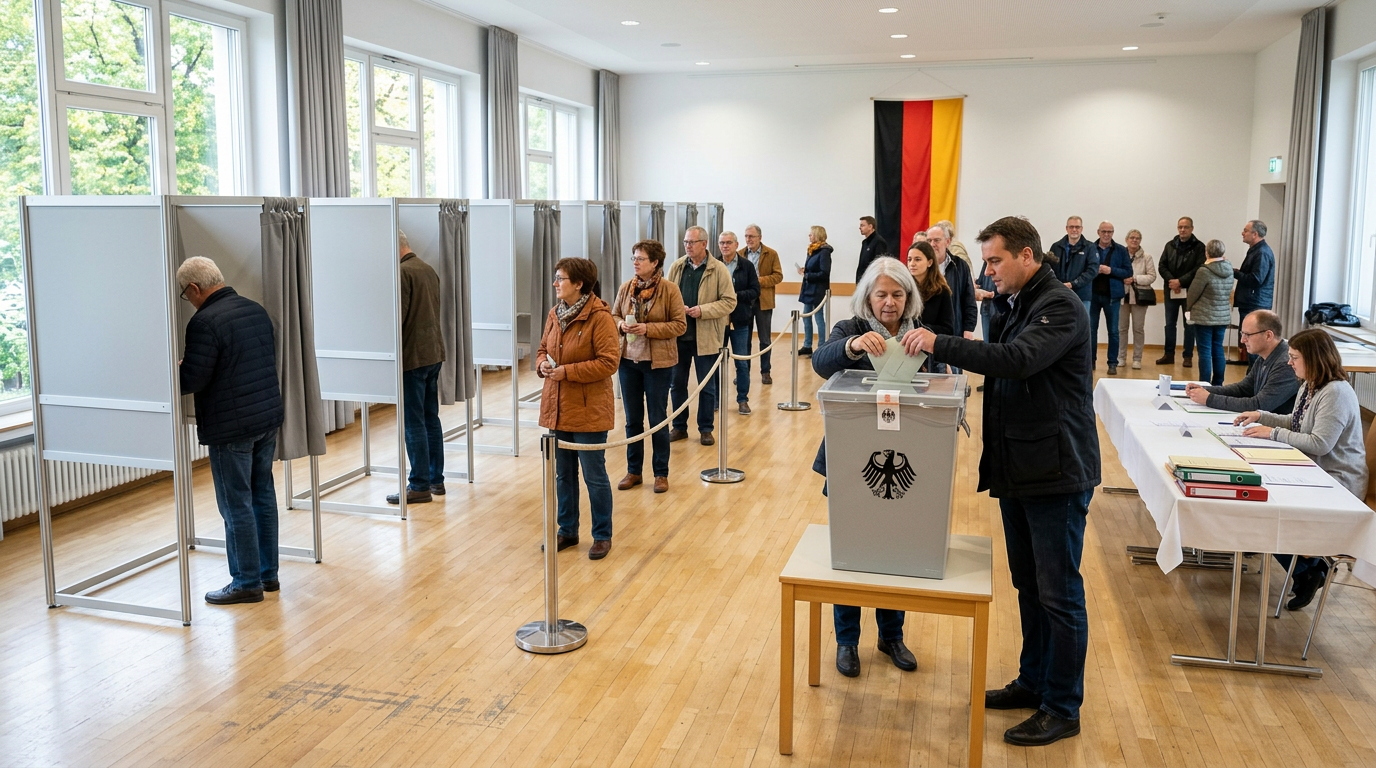

The far-right Alternative for Germany (AfD) achieved a historic result in Saxony-Anhalt, more than doubling its 2021 result. In Saxony, the CDU managed to remain the strongest party, despite losses. The regional elections in the two eastern German states reflect continuing changes in the regional political landscape.
(Staff: Germany / Politics & Elections)
On Sunday, September 6, 2026, voters in two eastern German states went to the polls to elect new representatives to their regional parliaments. The results brought a resounding success for the far-right Alternative for Germany (AfD) in Saxony-Anhalt, while in Saxony, the Christian Democratic Union (CDU) remained the largest party, although it suffered significant losses.
Historic AfD victory in Saxony-Anhalt
In Saxony-Anhalt, the AfD achieved the best result in its history in a regional election. According to post-election forecasts, the party led by Alice Weidel received approximately 44.5% of the vote according to ARD, or 44% according to ZDF. This more than doubled its 2021 result of 20.8%. It is the highest result ever recorded by the AfD in an election for a regional parliament.
The CDU, Chancellor Friedrich Merz’s party, suffered a sharp decline, receiving only about 18.5%. The other parties recorded significantly lower results: Die Linke (The Left) – about 9.5%, the SPD (Social Democrats) – 8%, and the Sahra Wagenknecht Alliance (BSW) – 5%.
AfD leaders hailed the result as a “clear mandate to govern”, while party supporters celebrated the victory at election-night events. However, although the AfD won by a wide margin, it did not secure the absolute majority required to govern alone.
CDU remains the largest party in Saxony
In Saxony, the situation is different. According to the available data, the CDU remained the largest party with 32.1% of the vote. The AfD also made significant gains, reaching 27.5% and becoming the second-largest party in the regional parliament.
According to preliminary figures, the CDU would have 41 seats in the new parliament, the AfD 40 seats, and BSW 15 seats. Forming a government in Saxony is expected to be difficult, with the CDU needing to find coalition partners in order to secure a majority.
Background and implications
The elections in the two eastern German states come amid a tense political climate at the national level. The result in Saxony-Anhalt is regarded by many analysts as a “political earthquake” and a strong signal of dissatisfaction with the traditional parties. Political observers point to a combination of factors behind the AfD’s victory, including dissatisfaction with federal government policies, economic problems and migration.
Reactions to the results have varied. While the AfD is celebrating its success, the other parties face difficult questions about how to respond to the rise of the far right. In Saxony, forming a stable government will require complex negotiations between the parties.
Conclusion
The 2026 regional elections have confirmed the growing strength of the AfD in eastern Germany, particularly in Saxony-Anhalt, where the party achieved a historic result. In Saxony, the CDU remained the largest party, but its losses and the AfD’s rise will make the formation of a stable government difficult. The results reflect continuing changes in the regional political landscape and raise questions about Germany’s political future.




Leave a Reply