

Eight models were tested by a Belgian consumer organisation. The cheapest cost less than 400 euros per kWh, while the most efficient achieve over 80% efficiency. These are the three best plug-and-play home batteries of 2026 and how to choose the right one for your situation.
(Staff: Belgium & the Netherlands / Energy & Technology)
If you have solar panels and a smart meter, you’ve probably wondered how to use more of the energy you generate yourself. The answer is a plug-and-play home battery – a device you plug into a socket that stores excess energy for when the sun isn’t shining. A recent test by a Belgian consumer organisation evaluated eight such batteries and identified the best models of 2026. Here’s what you need to know before making a choice.
What are plug-and-play batteries?
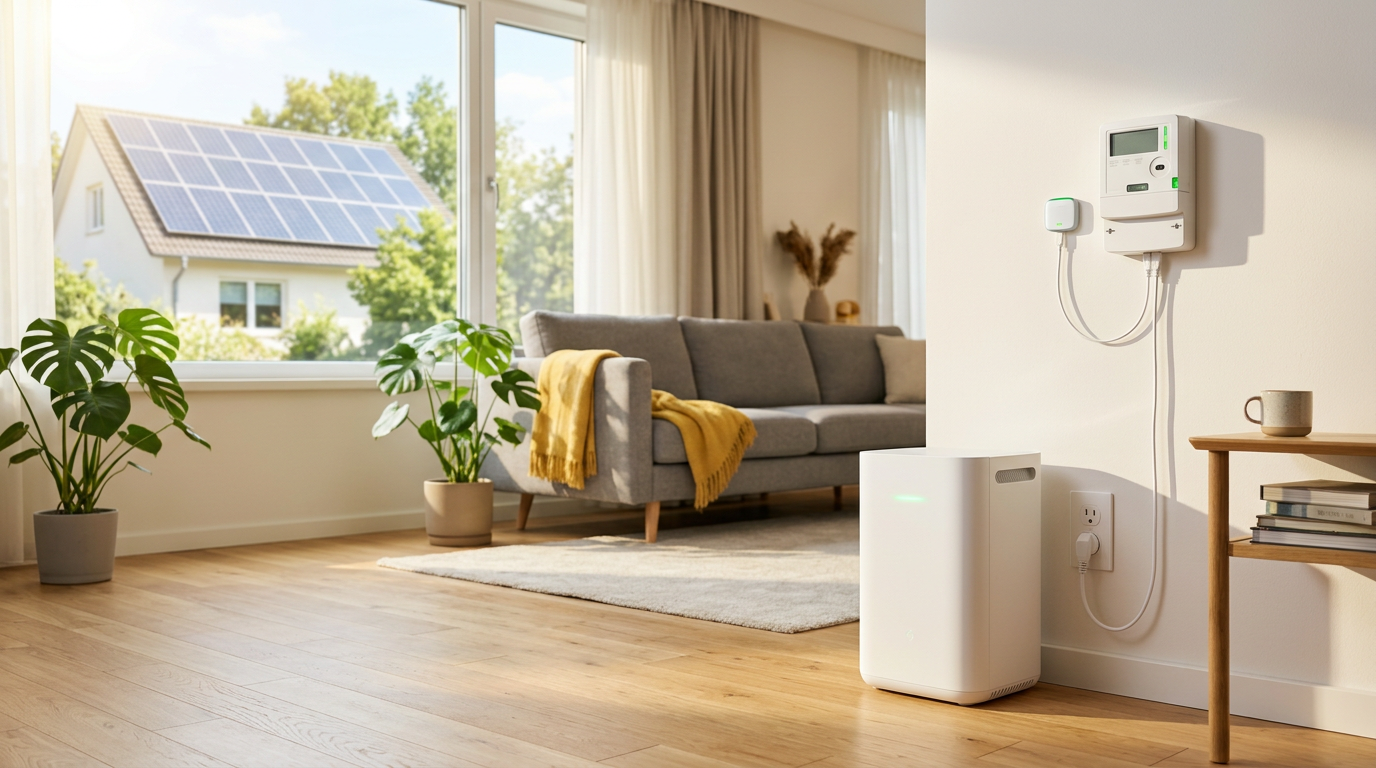
Plug-and-play batteries are energy storage solutions that you can install as easily as a household appliance: you simply plug them into a socket. The socket provides three functions: powering the battery, charging it with surplus energy from your solar panels, and supplying stored electricity to your home when you need it. For this to work properly, the battery must communicate with your smart meter (usually via a dongle connected to the P1 port).
Why choose a plug-and-play battery?
The main advantage is the price. A plug-and-play battery costs an average of 417 euros per kWh, compared with 600 to 850 euros per kWh for a fixed installation. Although the storage capacity is smaller – between 1.92 and 5.12 kWh – the first 1 to 3 kWh provide the best return. For an average user with a self-consumption rate of around 30%, a well-sized battery can almost double that figure.
What to check before buying?
Before buying a battery, make sure that:
- You have a smart meter – otherwise, you’ll need to have an additional device installed in your fuse box.
- The battery is on the Synergrid list – this means it is approved for the Belgian market.
- You have a dry, frost-free space – performance drops at low temperatures.
How were the batteries tested?
The eight tested models come from the brands Zendure, Marstek, EcoFlow, AEG, Anker, Homewizard and Sunpura. The tests assessed:
- Efficiency – how much energy you can recover from what you store. At 23°C, six of the eight batteries achieved over 80% efficiency, with an average of 82.4%. At 5°C, the average dropped to 78.1%.
- Standby consumption – the differences are significant: the most efficient model consumes less than 1 watt, while the least efficient consumes 36 watts.
- Safety – all models shut down automatically in the event of an overload, and surface temperatures remained below the critical threshold of 65–70°C.
The three best plug-and-play home batteries of 2026
Based on these criteria, the three best models are:
- Marstek – offers the largest capacity (5.12 kWh) and stable efficiency.
- EcoFlow (Stream Ultra X) – 3.84 kWh, with an excellent price-performance ratio.
- Zendure – 2.4 kWh, ideal for those who want to start with a small investment.
Conclusion
A plug-and-play battery is not a luxury, but an affordable and efficient way to increase your self-consumption of solar energy and reduce your electricity bill. Before buying, check whether you have a smart meter, choose an approved model, and consider the temperature of the room where you will place the battery. With an investment of a few hundred euros, you can take an important step towards energy independence.





Leave a Reply