
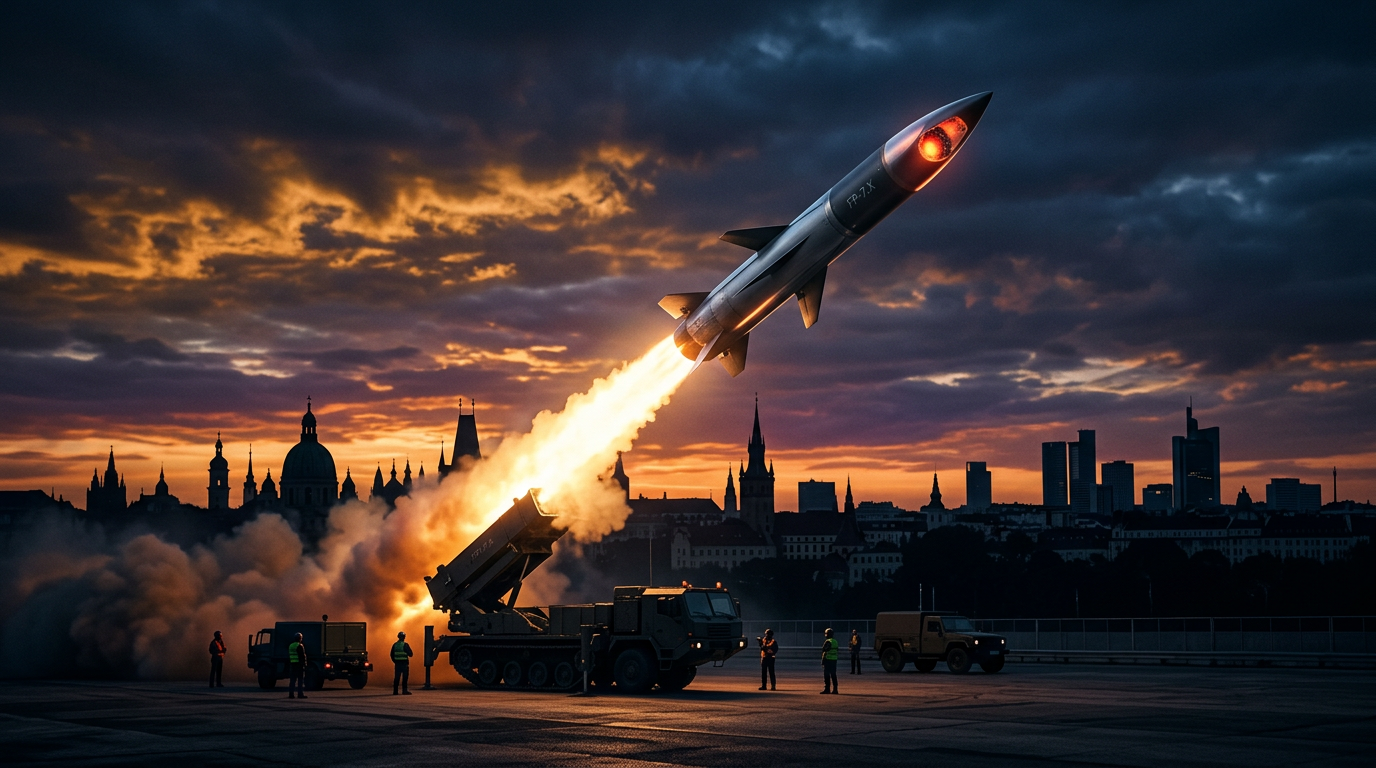

In July 2026, in Paris, Ukraine and nine European states – including France, Germany, Sweden, and the United Kingdom – launched the Anti-Ballistic Coalition for the FREYJA project. The goal: a European anti-ballistic missile defense system, with interceptors produced by the Ukrainian company Fire Point and radar and guidance components from 13 European defence companies. Cost per interceptor: approximately $700,000, compared to $3.8 million for a PAC-3 Patriot system missile. The first prototype is expected to be ready in the first half of 2027.
(Staff: Europe & Ukraine / Security & Defense)
The war in Ukraine has exposed a strategic vulnerability for Europe: its near-total dependence on American anti-ballistic missile defence systems, particularly the Patriot. In July 2026, in Paris, a consortium led by Ukraine and supported by nine European states decided to put an end to this monopoly. The project is called FREYJA – a pan-European anti-ballistic missile defence system that aims to provide a cheaper, faster-to-produce alternative, fully controlled by Europe.
Why FREYJA?
In the first two weeks of July 2026, Ukraine failed to intercept a single Russian ballistic missile. Patriot interceptor stocks were depleted, and US production could not keep up with demand. President Volodymyr Zelensky stated that Ukraine needs 300 Patriot interceptors for the coming winter, but they are not available. “America also needs to defend its own bases from Iran’s attacks,” Zelensky said in Paris.
How does FREYJA work?
The FREYJA system combines the FP-7.X interceptor missile – produced by the Ukrainian company Fire Point – with radars, guidance systems, and command centres provided by European partners. The FP-7.X missile is 7.25 metres long, has a speed of 1,500–2,000 metres per second, a range of up to 200 kilometres, and a warhead weighing up to 150 kilograms.
European companies involved include:
- Kongsberg (Norway) – command and control centre
- Diehl Defence (Germany) – guidance system
- Hensoldt (Germany) – TRML-4D radars with AESA technology
- Eurosam, Thales, Leonardo, Saab – expertise in missile guidance and airspace management
Cost: four to six times cheaper than Patriot
A FREYJA interceptor is estimated to cost approximately $700,000 (under one million euros). In comparison, a PAC-3 MSE Patriot system missile costs up to $3.8 million. This price difference allows for large-scale production and the creation of sufficient stockpiles for intense ballistic missile attacks.
An open architecture system
A key feature of FREYJA is its open architecture. Each member state of the coalition can integrate its own national technologies. If Denmark wants Weibel radars, or Sweden opts for Saab solutions, the platform allows these adaptations without major structural changes. This flexibility reduces bureaucracy and production costs compared to external procurement.
When will it become operational?
The goal is for the first successful interception of a ballistic missile to take place by mid-2027. Aviation expert Kostiantyn Kryvolap stated that the project’s challenges are more political than technical: “Europe already has everything needed to assemble the missile defence system. The only thing missing is the missile. Ukraine provides the missile”. Tests could begin by the end of 2026.
What does it mean for Europe?
The FREYJA project represents more than just a missile defence system. It is a political statement: Europe can ensure its own security without relying on the United States. French President Emmanuel Macron stated: “What we are building here is not only for Ukraine. It is a demonstration that Europe can provide for its own security, defend its interests and act with force”.
FREYJA is not designed to replace Patriot, but to complement it. While Patriot remains a battle-tested system, FREYJA offers a cheaper, European-produced alternative that can be quickly adapted to new threats. If the project succeeds, Europe will have its own anti-ballistic shield for the first time – a major step towards strategic autonomy.

Leave a Reply