
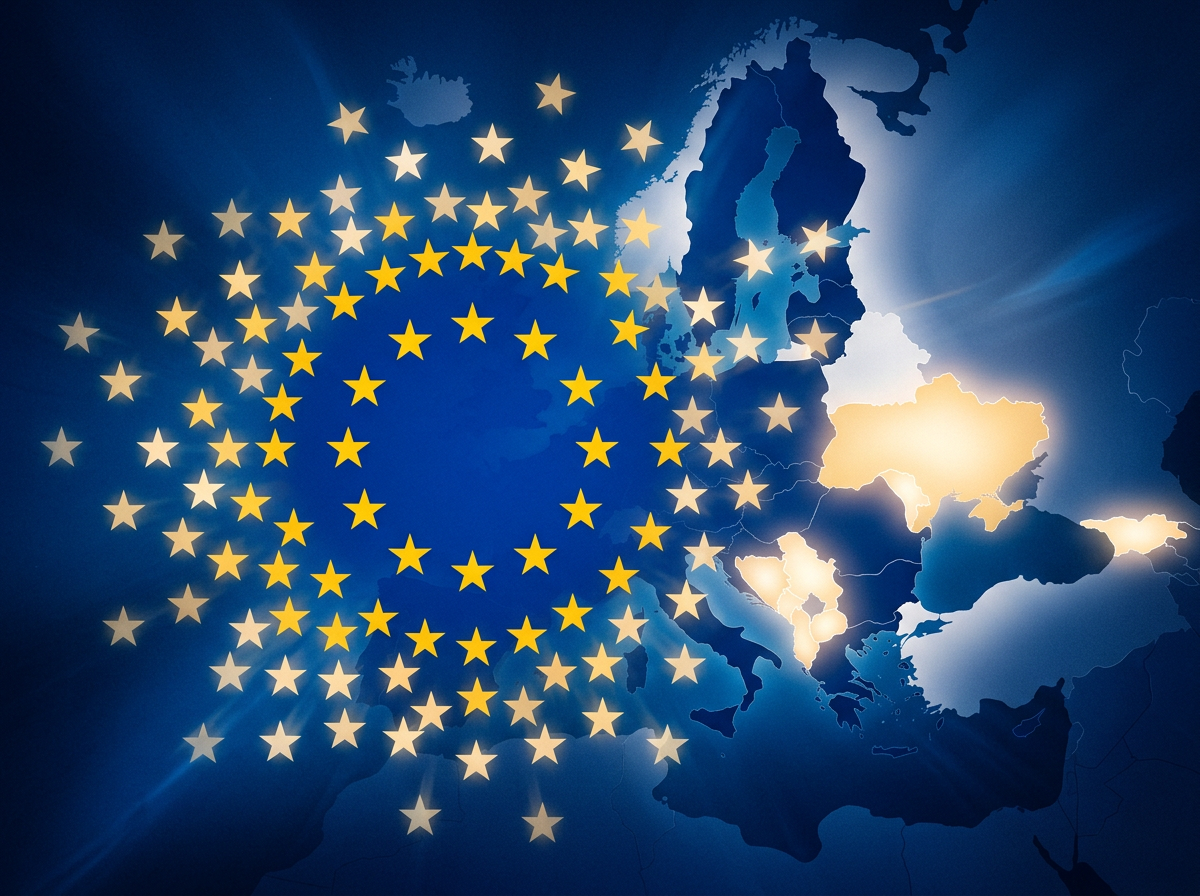

On 26 August 2026, Icelanders go to the polls to decide whether to start accession negotiations with the European Union. At a time when European geopolitics is changing rapidly, the question is: which countries could be next to join the EU?
(Staff: Europe / Politics & Extension)
Iceland, the Nordic island nation, has decided to reopen the discussion on joining the European Union. On 26 August 2026, Icelandic citizens are called to the polls for a consultative referendum that could open the way to official accession negotiations. Icelanders already held such a referendum in 2009, but the process was frozen in 2013 due to opposition from the fishing and agricultural sectors to common European policies.
Iceland and its complicated relationship with Europe
Iceland is already a member of the European Economic Area (EEA), meaning it applies many European laws but has no say in the decision-making process. Therefore, supporters of accession say it is time for Iceland to become a full member, to have a seat at the decision-making table. In contrast, opponents warn that accession could undermine Icelandic sovereignty, particularly in the field of fisheries and natural resources.
Which countries could be next to join the EU?
Regardless of the outcome of the vote in Iceland, the EU enlargement process continues on several fronts. Here are the main candidates and their situation in 2026:
1. The Western Balkans – the EU’s strategic priority
The Western Balkans are considered the most important enlargement priority of the European Union. However, the process is slow and conditional on internal reforms. Here is the situation of each country:
- Montenegro – is the most advanced candidate, with accession negotiations open since 2012. It has closed 33 negotiating chapters and hopes to join by 2028, if it manages to meet the criteria.
- Serbia – negotiations have been open since 2014, but progress is slow. Relations with Kosovo and judicial reform are the main obstacles.
- Albania – negotiations officially began in 2022. Albania must strengthen its rule of law and fight corruption.
- North Macedonia – negotiations began in 2022, but the dispute with Bulgaria over language and history remains a problem.
- Bosnia and Herzegovina – received candidate status in 2022, but has not yet started negotiations. Political reforms are slow.
- Kosovo – is a potential candidate, but is not recognised by all EU member states, which complicates the process.
2. Ukraine and Moldova – the exceptional cases
The Russian invasion has radically changed the European geopolitical landscape. In 2022, Ukraine and Moldova received candidate status, and in December 2023, the EU decided to open accession negotiations. This is an unprecedented process, but the road is long and difficult. Both countries must implement major reforms, particularly in the areas of justice and the fight against corruption.
- Ukraine – negotiations officially began in 2024. There is no specific date for accession, but European officials speak of a horizon of 5-10 years.
- Moldova – negotiations began in 2024. The country must resolve its problems related to Transnistria and strengthen its institutions.
3. Georgia – a candidate with obstacles
Georgia received candidate status in December 2023, but negotiations have not yet started. The EU has conditioned the start of negotiations on democratic reforms and alignment with European foreign policy. Georgia must demonstrate its commitment to European values.
4. Turkey – the frozen case
Turkey has been a candidate since 1999 and began negotiations in 2005. However, the process has been practically frozen for years, due to concerns about the rule of law and human rights. There are no realistic prospects of accession in the foreseeable future.
How realistic is a new wave of enlargement?
EU enlargement is a complex process, requiring unanimity among member states. Some countries, such as France and the Netherlands, are sceptical about rapid enlargement. They call for internal EU reforms before accepting new members. On the other hand, Central and Eastern European countries strongly support enlargement, particularly in the case of Ukraine and Moldova.
Conclusion
Iceland is a special case, but its vote reminds us that EU enlargement remains a topical and controversial issue. The Western Balkans are a priority, but the process is slow. Ukraine and Moldova are exceptional cases, but the road is long. What is certain is that enlargement will not happen overnight, and each candidate has its own challenges. In 2026, the question is not “if”, but “when” and “how” the European Union will expand. Union will expand.




Leave a Reply