
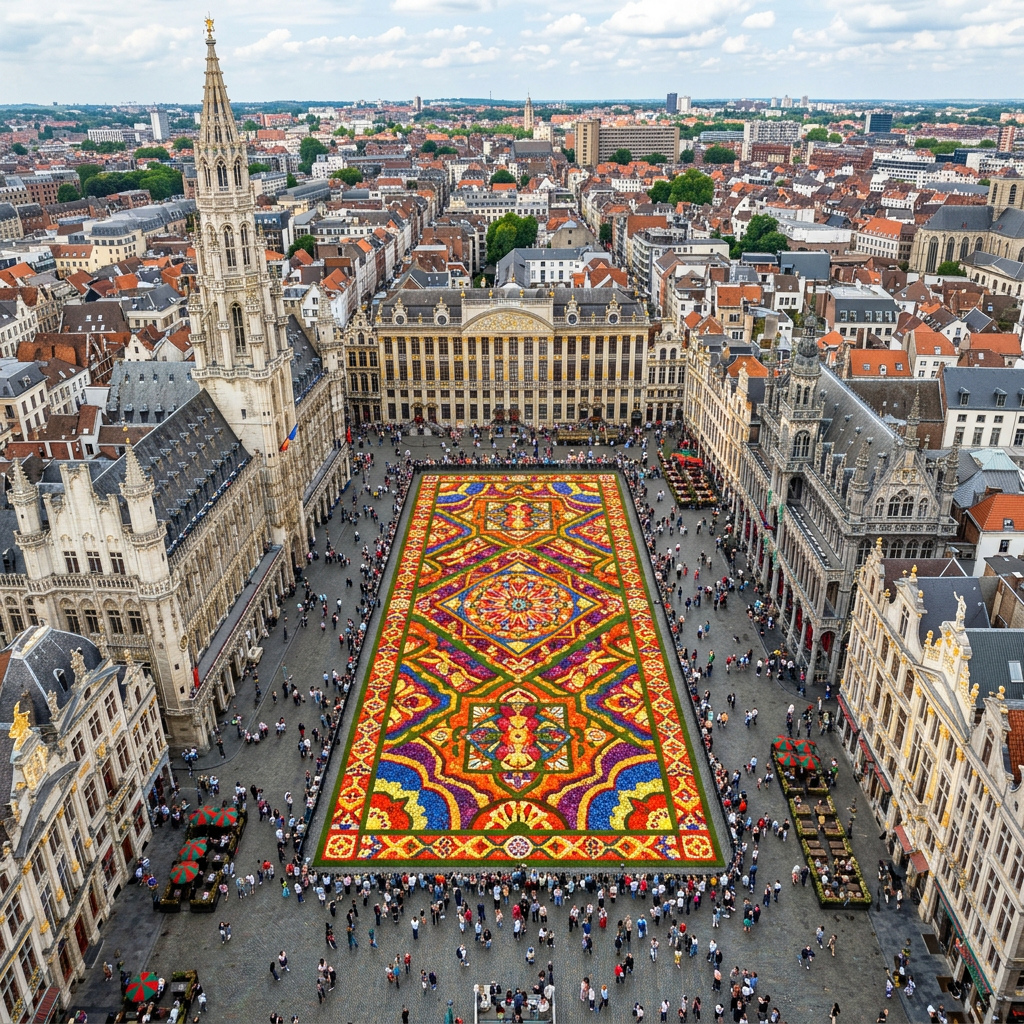

Before becoming one of Brussels’ most famous events and a symbol of Belgium, the Flower Carpet was first a reality in Oudenaarde. Everything changed in 1970, when two local aldermen visited the city and decided that such beauty should come to the Grand-Place. A royal visit sealed the transfer, it seems.
(Staff: Belgium / Culture & History) Cristin Tomeci
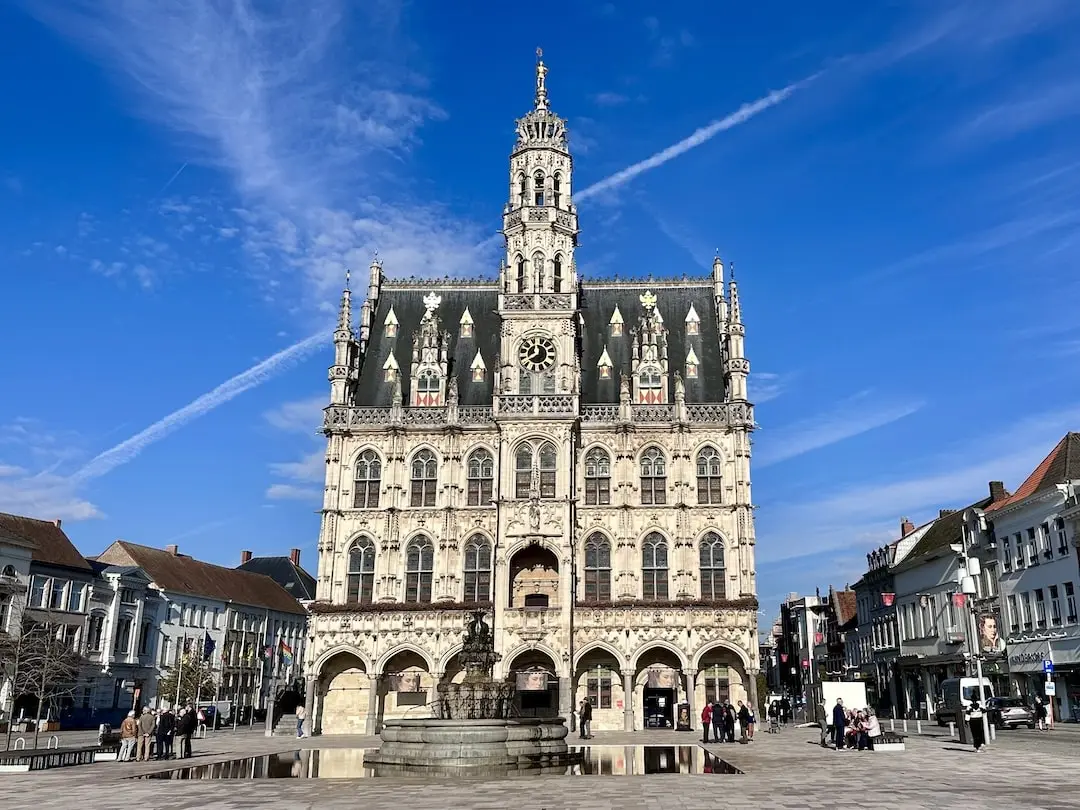
Today, the Flower Carpet on the Grand-Place in Brussels is one of Belgium’s most spectacular tourist attractions, a biennial event that attracts hundreds of thousands of visitors. But few know that the story of this carpet did not begin in the heart of the capital, but in a smaller city in the heart of Flanders: Oudenaarde. The truth is that the first modern Flower Carpet was not woven in Brussels, but came to life on the cobblestones of Oudenaarde’s central square. And it all happened thanks to the visit of two aldermen from Brussels, who were so impressed that they decided to “steal” the idea for the capital.
Beginnings in a Flemish city
The first small flower carpets appeared as early as 1952 in several cities, including Oudenaarde, Knokke and Lille. The initiator of these ephemeral creations was the landscape architect Etienne Stautemas, a visionary who turned flowers into art. In Oudenaarde, these vegetable tapestries were already a local tradition, and in 1970, one of these carpets caught the attention of two guests from the capital.
The visit that changed everything
In 1970, Mrs. Van Den Heuvel and Mr. De Rons, two aldermen of the city of Brussels, were on an official visit to Oudenaarde. While walking on the central square, they discovered a breathtaking flower carpet, composed of thousands of flowers. Impressed by what they saw, the two local representatives immediately wondered: why shouldn’t Brussels have such an event?
From Oudenaarde to the Grand-Place
The idea quickly took shape. Only a year after that visit, in 1971, the first Flower Carpet was laid on the cobblestones of the Grand-Place in Brussels. The project was realized by Etienne Stautemas himself, the creator of the Oudenaarde carpets, in collaboration with the Brussels city centre traders’ association and the Flemish horticulturists’ federation. The first design, called “Arabesques” (Arabesken), set a standard that has lasted for decades, even becoming the model for the 2022 anniversary edition.
The role of the royal visit
Although legend has it that a royal visit was what convinced the authorities to permanently move the event to Brussels, historical documents suggest that the decision was a practical one, taken by the enthusiastic aldermen. It is possible that the king’s presence at one of the first Brussels carpets consolidated the event’s prestige, but the source of inspiration remains, without a doubt, Oudenaarde.
A tradition with roots in East Flanders
Although the Flower Carpet is now synonymous with Brussels, its roots remain firmly planted in Oudenaarde. Moreover, the flowers used for the carpet, especially the begonias, largely come from East Flanders, from the Lochristi region. And in 2026, Oudenaarde announced that it is considering bringing back its own flower carpet for the first time since 2005.
Conclusion
The story of the Flower Carpet is proof that some of the greatest traditions of a capital can have humble origins, in a smaller city. What began as an inspiration on a summer afternoon in Oudenaarde has become a symbol of Belgium, and the visit of two aldermen has forever changed the country’s cultural landscape.


Leave a Reply