
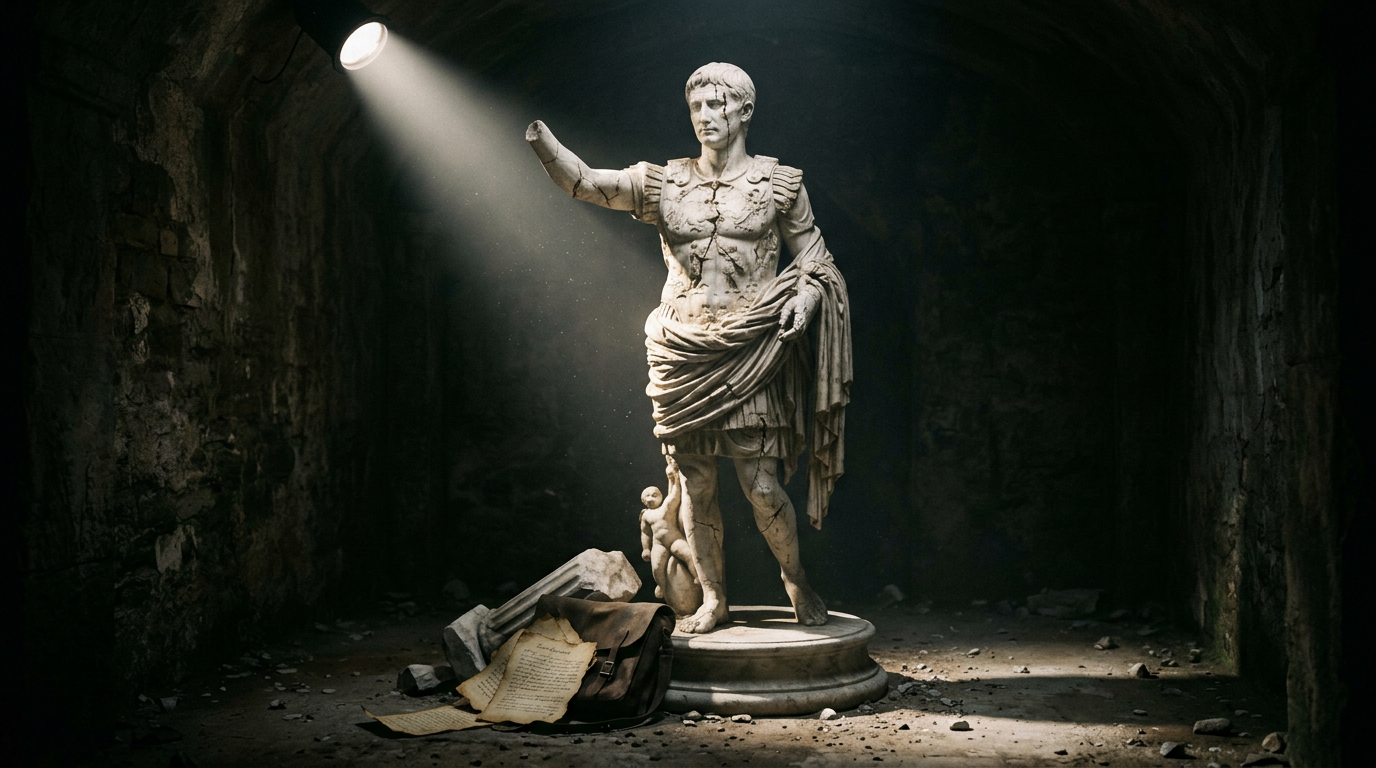

A user on a social network sparked a heated debate after publishing a list of accusations against some of the world’s most celebrated historical figures. From Lincoln’s racism to Mandela’s terrorism, from King’s infidelities to Churchill’s colonialism – how well do we really know our heroes?
(Staff: Global / History & Society)
In the era of digital iconoclasm, even the greatest heroes of mankind are no longer exempt from a critical look. A post on a social network revealed some of the most awkward truths about five major historical figures: Abraham Lincoln, Winston Churchill, Nelson Mandela, Mahatma Gandhi and Martin Luther King. And the reactions did not take long to appear – from the vehement defense to the demand for sources and historical contextualization.
Abraham Lincoln – the emancipator who did not believe in racial equality
Lincoln is celebrated for abolishing slavery in 1865. But as the post underlines, during the presidential debates of 1858, he had declared that he did not believe in racial equality or the right of blacks to vote. A commentator draws attention to the fact that Lincoln changed his view by 1865, and historians point out that judging a 19th-century man with today’s moral standards is a fundamental error.
Winston Churchill – the hero who wanted to use toxic gases against “uncivilized tribes”
Churchill is revered in Europe for his role in the defeat of Nazi Germany. However, the post recalls that in 1919, as Minister of War, he wrote a memo in which he supported the use of toxic gases against the Middle Eastern tribes. Also, under his leadership, millions of Indians died of famine during the British occupation.
Nelson Mandela – From Terrorist to President
Mandela is a symbol of the fight against apartheid. But, as the comments show, he founded an armed faction of the African National Congress (ANC) that resorted to sabotage and attacks resulting in more than 130 deaths. Some participants in the debate point out that Mandela was imprisoned for terrorism, not just political activism. Others, however, defend him: “When a regime blocks all peaceful ways of change, armed resistance becomes inevitable.” Historians point out that Mandela later distanced herself from violence and became an architect of reconciliation.
Mahatma Gandhi – the controversial relationship pacifist
Gandhi is synonymous with non-violence. But the post reveals that he slept next to minor girls to test his spiritual purity – a habit that many historians find problematic. Also, in his period in South Africa, Gandhi made racist statements about the black population. Commentators point out that Gandhi was a socially conservative who did not fight against the caste system, and his position towards the partitioning of India remains controversial.
Martin Luther King – Civil Rights and Private Life
King is a symbol of the civil rights movement. But, as the post notes, he had extramarital affairs with dozens of women, including prostitutes, and plagiarized some of his academic works. A commentator raises a disturbing question: “How long is it immoral to have 40 relationships? If you’re polyamorous, you’re praised, but if King does, he’s blamed?” Others point out that these details do not invalidate his struggle for social justice.
Conclusion – Heroes are people too
The debate revealed a fundamental tension: how do we judge the leaders of the past? with today’s standards or in the historical context of their era? Historians warn that the so-called “dark sides” are often presented tendentiously, without context. A commentator formulated the essentials: “No man is perfect, but some have loved nature and others more than others – let that be enough for us.” Perhaps the real lesson is not to canonize or condemn them, but to understand the human complexity behind the great achievements and to learn that history is not a struggle between good and evil, but a nuanced narrative, in which even heroes have shadows.



Leave a Reply