
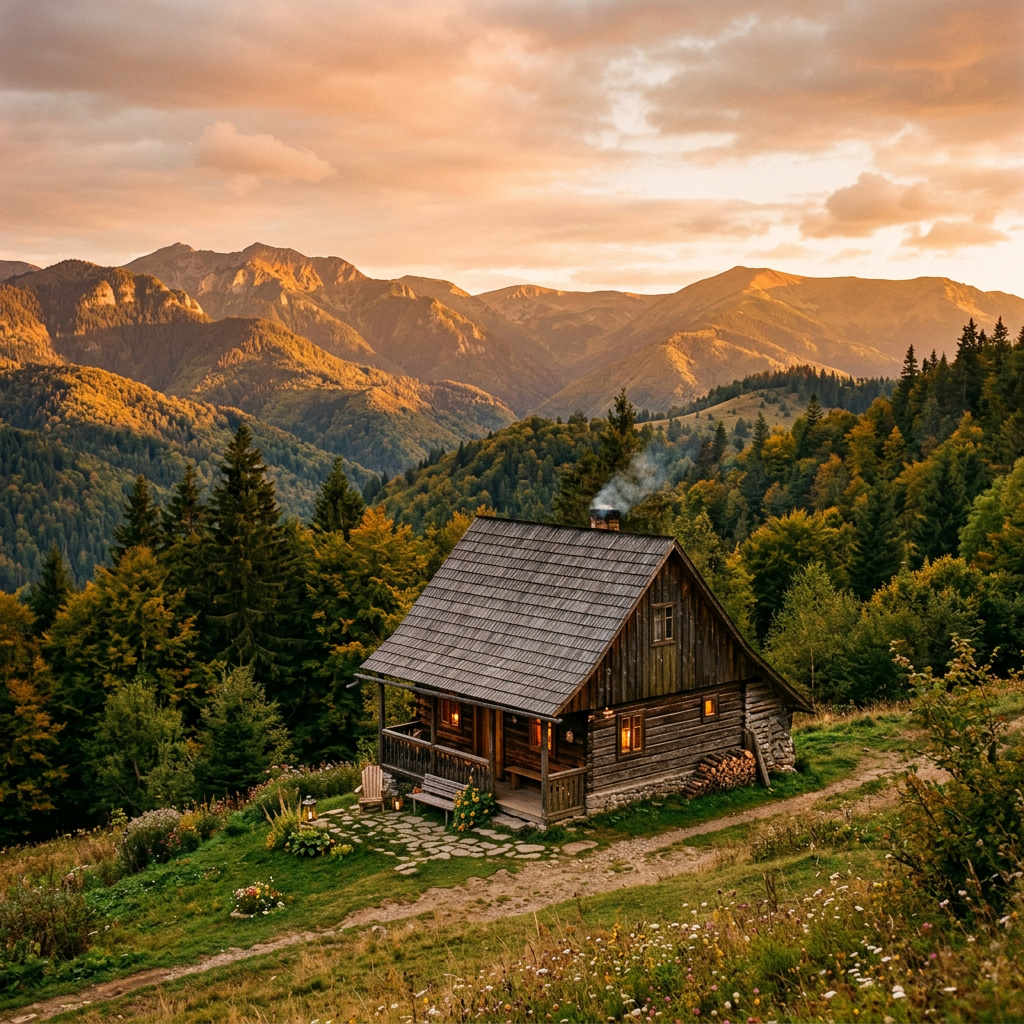

“Forget about vampire stories – the Eastern Carpathians offer dramatic peaks, roaming bears, and deep silence.” An extensive report by the British publication The Guardian brings back to the world’s attention a region almost unknown to foreign tourists, where 85% of visitors are Romanians, and the prices are much lower than in the Alps.
(Staff: Romania / Tourism & Nature)
When the sun sets beyond the high forest line, the campfire sizzles and four trout fry on a stone heated by flames – a cooking technique used for centuries in the Gurghiu Mountains. Aside from the chirping of birds, this is the only sound at 1,550 meters above sea level, far from any city or village. “This area is very wild,” says Samir Teslovan, the local guide who led the journalists of the British publication The Guardian through the heart of the Eastern Carpathians. “When I come to the mountains I charge my battery, I charge my soul. I feel free, like the wind”. .
A region almost unknown to international tourism
In Harghita county, over 85% of visitors are Romanian. And this is surprising, given the treasures that the region hides: endless forests of spruce, fir, beech and pine, volcanic lakes, spectacular gorges and a population of bears that rival the densest in Europe. British journalist Graeme Green and his family spent 12 days on a road trip through the county, staying in local cottages and guesthouses, discovering a world that seems detached from another time.
“There are places here that no one knows,” says Samir Teslovan. The region once belonged to the Austro-Hungarian Empire, and the local population is mostly of Hungarian origin (about 85%), identifying as the Szeklers. Hungarian influence can be seen in the local cuisine – from goulash to kürtőskalács (Szekler rolls) – and in the hand-sculpted wooden gates that flank the entrances of the houses. .
In the footsteps of bears and volcanic lakes
One of the most impressive meetings took place on the way to Lake Sfânta Ana, the only volcanic lake in Romania. In the forest, they saw a bear with chicks as the air smelled on the side of the road. In the evening, from the Medveles Székelyföld bear observatory, they watched four bears feeding on corn. Harghita has one of the highest bear densities in Europe. .
They also visited a special hiding place for observing the bears, near the resort of Băile Homorod, where two imposing bears approached the feeding area. They rented a boat on Lake Zetea, where “the warp sometimes come to drink water on the shore”. And they spent whole afternoons in the middle of the water, floating and being carried away by the silence – “a glorious feeling of peace, of nature and freedom, like the wind”. .
An authentic, affordable adventure
Accommodation in a quiet cottage in Sâncrăieni, with a spruce bedroom and a wooden terrace, costs from £75 per night. A guesthouse near Red Lake costs around 50 pounds. And the bear observation costs between 25 and 35 pounds per person. Compared to the Alpine resorts in the Dolomites or the French Alps, the prices are much lower and the crowding is almost non-existent. .
In addition to hiking and observing the bears, the family also visited Mini Transylvania Park – a park with detailed patterns of castles and churches in Transylvania – and Insect Park, with huge and mobile insect patterns. They climbed the peak of Harghita Mădaraș, at 1,801 meters, the highest point of the Harghita Mountains. .
Conclusion
Transylvania is much more than castles and vampire stories. It is a region where the wilderness of nature, the hospitality of the locals and the deep tranquility of the mountains offer an authentic experience, hard to find elsewhere in Europe. For those looking for a family adventure, far from the crowd and at affordable prices, Harghita County is the perfect destination. “When I come to the mountains, I charge my battery, I charge my soul. I feel free, like the wind,” says Samir Teslovan. And this feeling of freedom is perhaps the most precious souvenir you can take home.

Leave a Reply