
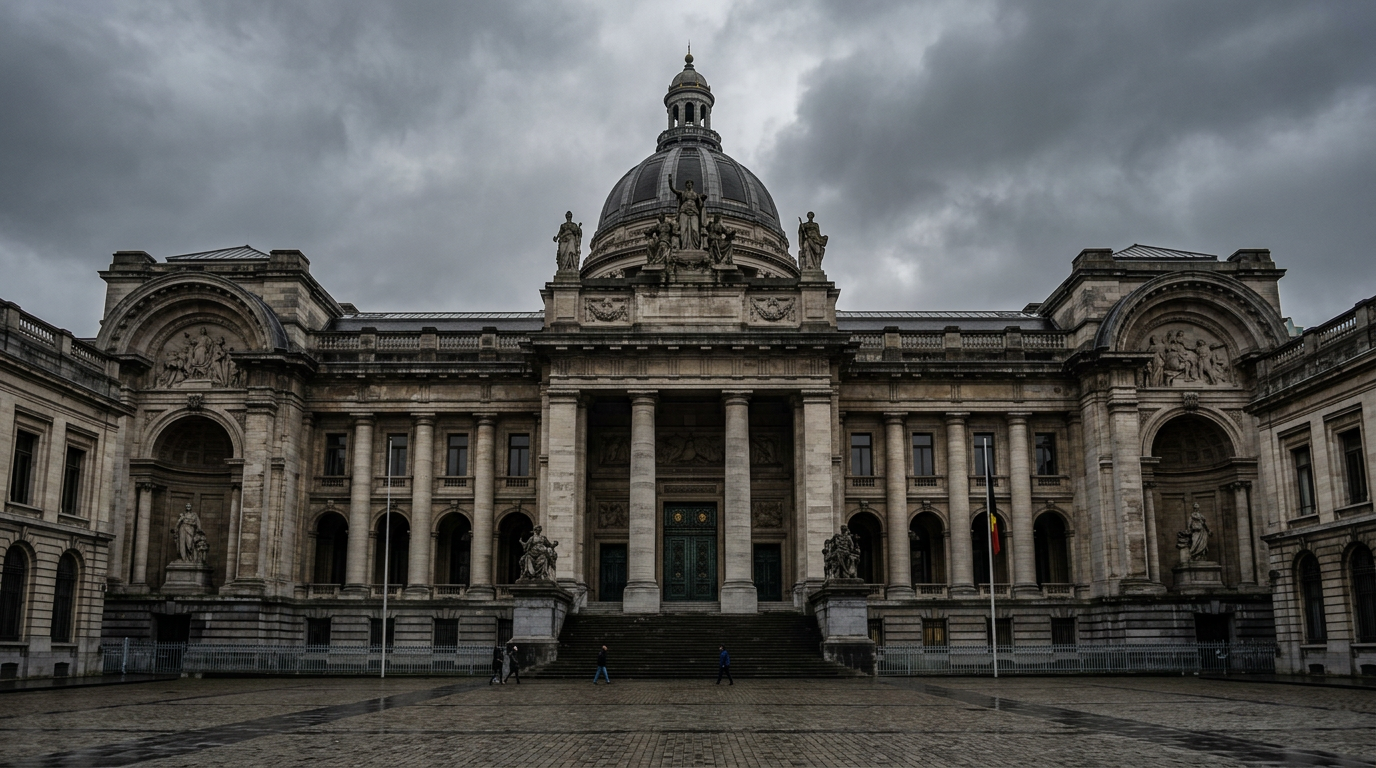

While most European countries have abolished or drastically limited citizen participation in the trial of serious crimes, Belgium has preserved a unique system: the Court of Assizes (Cour d’assises). Here, 12 ordinary citizens decide themselves whether an accused person is guilty or not, in a trial that often lasts several weeks or even months. Here is how it works, how jurors are selected, and why they are required to remain isolated from the outside world until the verdict.
(Staff: Belgium / Justice & Society)
The Court of Assizes, known in Belgium as the Cour d’assises, is one of the oldest and most symbolic institutions of the Belgian judicial system. Established in 1831, with Belgian independence, it was conceived as a pillar of participatory democracy: a place where ordinary citizens, and not only professional magistrates, have the final say on the guilt of those accused of the most serious crimes. What makes the Belgian Court of Assizes truly special is that it is the only court in continental Europe that has preserved the Anglo-Saxon model in its pure form – jurors decide on guilt themselves, without professional judges taking part in the final vote.
What is the Court of Assizes and what makes it unique?
The Court of Assizes tries the crimes considered most serious under Belgian law: murder, assassination, terrorism, rape and other offences carrying sentences of more than 20 years in prison. The particularity of this court is that the decision on the defendant’s guilt is made by a popular jury, composed of ordinary citizens, rather than professional judges. This system is similar to that of the United States, where jurors decide whether a defendant is guilty or not.
How are the jurors selected?
The selection process is rigorous and automated. Jurors are chosen by drawing lots from a general list, updated every four years. To be included on this list, a citizen must meet the following conditions:
- Be registered on the electoral roll.
- Be between 28 and 65 years old when the lists are drawn up.
- Have full capacity to exercise civil and political rights.
- Be able to read and write.
- Not have been criminally sentenced to more than four months in prison or to more than 60 hours of community service.
For each trial, 60 potential jurors are selected by lot, from whom 12 full jurors and 12 alternate jurors are chosen. In large-scale trials, this list can be extended to 200 people. The law also requires a certain gender balance within the jury: no more than two-thirds of its members may be of the same sex. The selection is carried out automatically and electronically, and those selected are legally exempt from their professional duties for the duration of the trial, because serving on a Court of Assizes jury is considered a civic duty.
Total isolation of jurors – an extreme but necessary measure
An extremely important but often little-known aspect is the obligation to isolate jurors during the trial. Throughout the period in which they serve as jurors, they are accommodated in a specially arranged location, under supervision, and are completely separated from the outside world. They have no access to phones, the internet, television, newspapers or any other source of information that could influence their impartiality.
The purpose of this isolation is to prevent any outside influence on their decision. Jurors must rely exclusively on the evidence and arguments presented in the courtroom, not on what they read in the press or hear on television. In terrorism trials or major criminal cases, which can last weeks or even months, jurors are required to remain isolated for the entire duration of the trial. They cannot see their families, go home or resume their professional activities until the verdict is delivered. Although extreme, this measure is considered essential to guarantee a fair trial and an uninfluenced decision.
How is a trial conducted at the Court of Assizes?
The trial is presided over by a president (a magistrate of the Court of Appeal) and two assessors (judges of the court of first instance). Their role is to guide the proceedings and ensure that the law is respected, but they do not take part in the final vote on guilt.
The fundamental principle of the Belgian system is the orality of proceedings. Unlike in other systems, jurors do not have access to the written case file before the trial. They discover the evidence and hear witnesses during the hearings, making each trial a live reconstruction of the facts. This is also the main reason trials in Belgium tend to last longer than in France, where jurors have access to the case file.
After the hearings have concluded, the president formulates the questions that the jurors must answer. Traditionally, jurors are not instructed on legal matters, but only on the facts. They then retire together with the magistrates to the deliberation room. Although the magistrates participate in the discussions and put forward arguments, they have no right to vote on guilt; the decision belongs exclusively to the jurors.
An institution under pressure: “correctionalisation”
Although the Court of Assizes is a symbol of participatory democracy, the number of trials reaching it has fallen sharply over the past decades. A 2016 law expanded the possibility of having many serious offences tried by ordinary courts (correctional courts), a process known as “correctionalisation”. As a result, the Court of Assizes now deals only with the most serious cases, such as terrorism or crimes committed against police officers. Some see this trend as a measure to make justice more efficient (trials are faster and less expensive), while others see it as an erosion of citizens’ right to participate in the administration of justice.
Conclusion
The Belgian Court of Assizes remains a unique case in Europe, a bridge between the continental legal tradition and the Anglo-Saxon model. Although the number of trials has declined, the institution continues to be a symbol of popular sovereignty and citizen participation in justice. And the total isolation of jurors, although extreme, remains a guarantee of impartiality in a system that places trust in citizens above all else.




Leave a Reply