
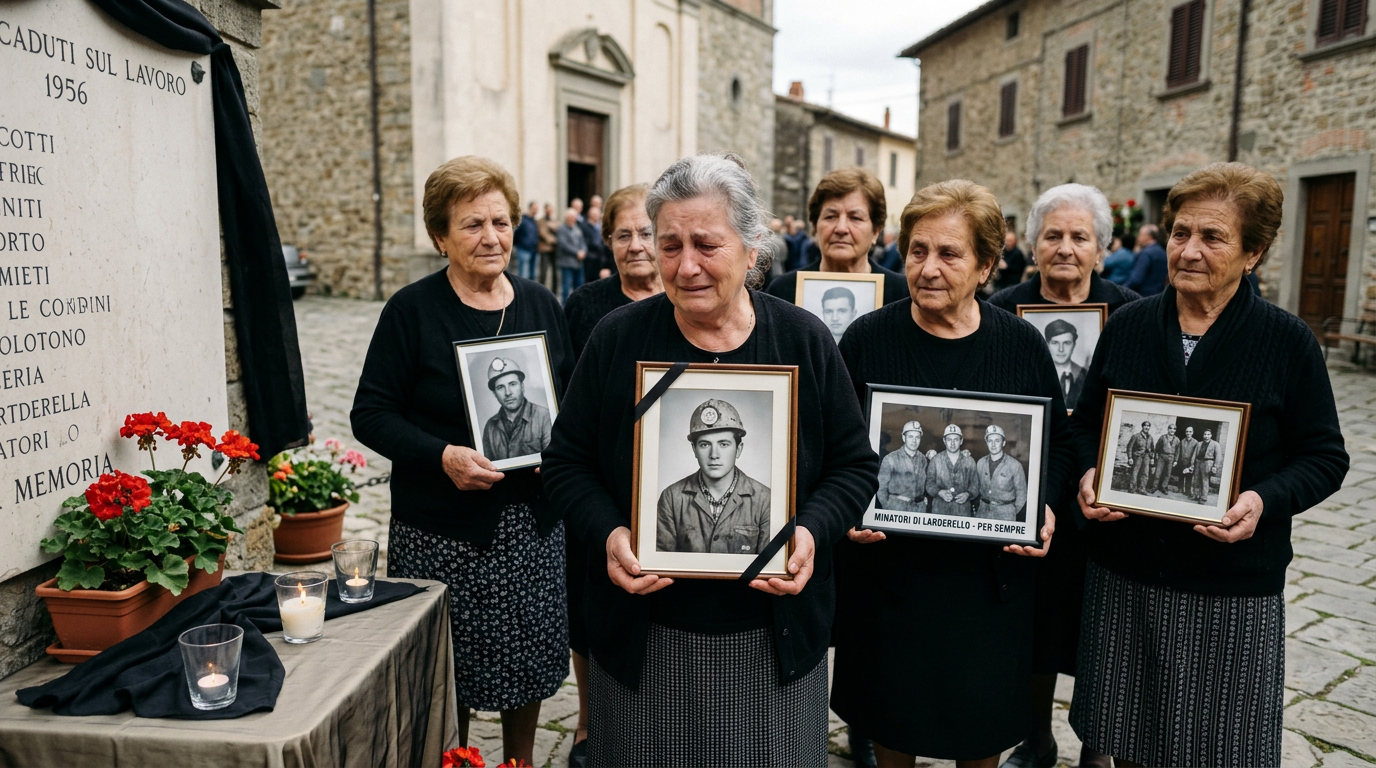

Today marks seven decades since the worst mining catastrophe in Belgium’s history. Among the 273 dead, the majority were Italian migrants who came to work in the coal mines. Families from around the world called out their names during an emotional ceremony.
Today, Belgium commemorates 70 years since the Marcinelle disaster, a tragic mining accident that occurred on August 8, 1956, near Charleroi. The explosion and fire at the Bois du Cazier mine killed 273 miners, of whom 136 were Italian citizens, who had come to Belgium as migrants in search of work.
A tragedy that marked generations
The Belgian Prime Minister delivered a solemn message today, stressing that Marcinelle remains an open wound in the collective memory of Belgium and Italy. The accident marked a turning point in migration policy and working conditions in Europe, leading to bilateral agreements between the two countries.
Commemoration: reading the names
Today’s ceremony included the traditional reading of the names of all 273 victims, a moment of deep reflection attended by Belgian and Italian officials, as well as families of the miners, who came from all corners of the world. Many of these families settled in Belgium after the accident, contributing to the formation of the strong Italian community in the Wallonia region.
Impact on mining policy
The Marcinelle tragedy accelerated the process of closing mines across Europe. Today’s commemoration implicitly highlights the contrast with the situation in Romania, where there are still voices calling for the continuation of mining activities. The Belgian experience demonstrates that mines are dangerous workplaces, and the transition to a modern economy has meant their gradual closure.
Conclusion
Marcinelle remains a painful symbol of the sacrifice of Italian migrants who helped rebuild Belgium after the war. Through today’s commemoration, Belgium reaffirms its commitment to the memory of the victims and to the values of European solidarity, at a time when the continent’s mining past is being put into perspective.
(Staff: Belgium / History & Society)



Leave a Reply