
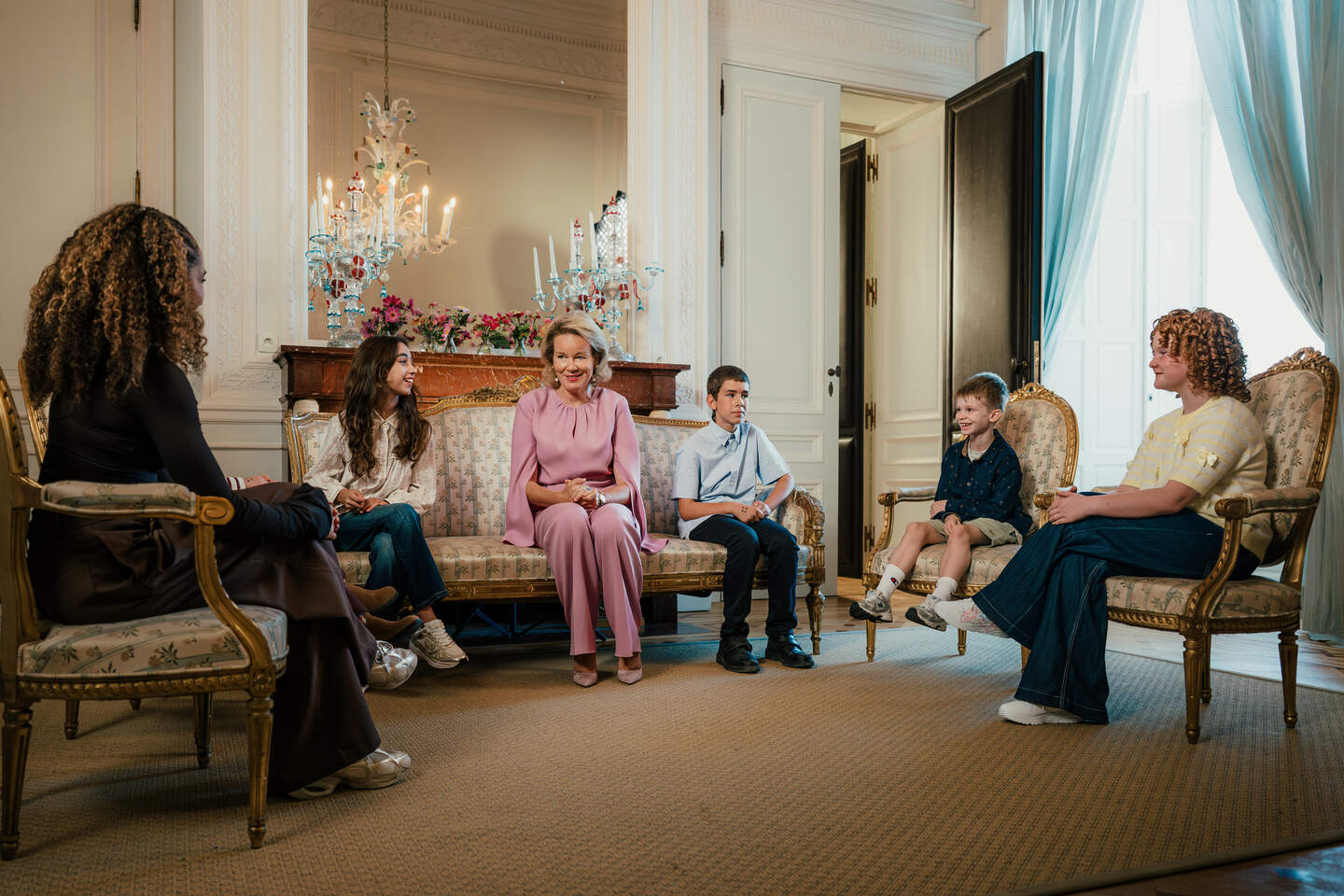

At the Royal Palace, Queen Mathilde welcomed five children who shared their stories about bullying. The “Stip it” campaign, launched by the Ketnet channel and the Flemish Network “Kies Kleur tegen Pesten” (“Choose Colour Against Bullying”), encourages young people and adults to draw four dots on their hands as a sign that bullying is not acceptable. A new TV programme, “Stip it: Kintsugi”, gives a voice to children who have overcome bullying.
(Staff: Belgium / Society & Education)
Queen Mathilde had four dots drawn on her hand at the Royal Palace, in a symbolic gesture marking the launch of the new “Stip it” anti-bullying campaign. Five children were also present and agreed to share their painful experiences. The event officially launched the campaign organised by children’s television channel Ketnet and the Flemish Network “Kies Kleur tegen Pesten”.
Four dots on the hand – a simple symbol, a powerful message
By drawing four dots on their hands, children and adults alike show that bullying is not acceptable. It is a simple, easy-to-copy gesture intended to draw attention to the devastating impact bullying can have on those affected. The campaign runs until 9 October.
“Stip it: Kintsugi” – a programme about wounds and healing
The campaign launch is accompanied by a new TV programme entitled “Stip it: Kintsugi”. Ketnet presenter Lee Arrendell explains: “We want to give a voice to brave children with moving stories. Together with them, we talk about what bullying does to you, but above all about how you can become strong again, step by step.”
In the programme, five children share their experiences. “I am extremely proud that these children wanted to tell their story,” Arrendell continues. “Their openness can give other children facing bullying recognition, comfort and hope. Because, just as in the Japanese art of kintsugi, where broken pottery is repaired and the cracks are highlighted with gold, wounds do not have to be hidden: you are allowed to see them, acknowledge them and, ultimately, repair them with gold.”
Conclusion
The “Stip it” campaign brings back into focus a serious problem faced by many children and young people. Through the simple gesture of four dots on the hand and the brave stories shared in the “Kintsugi” programme, the organisers hope to change attitudes and offer support to those who feel alone in the face of bullying. Through her involvement, Queen Mathilde sends a strong message: no one should suffer in silence, and wounds can be healed.





Leave a Reply