
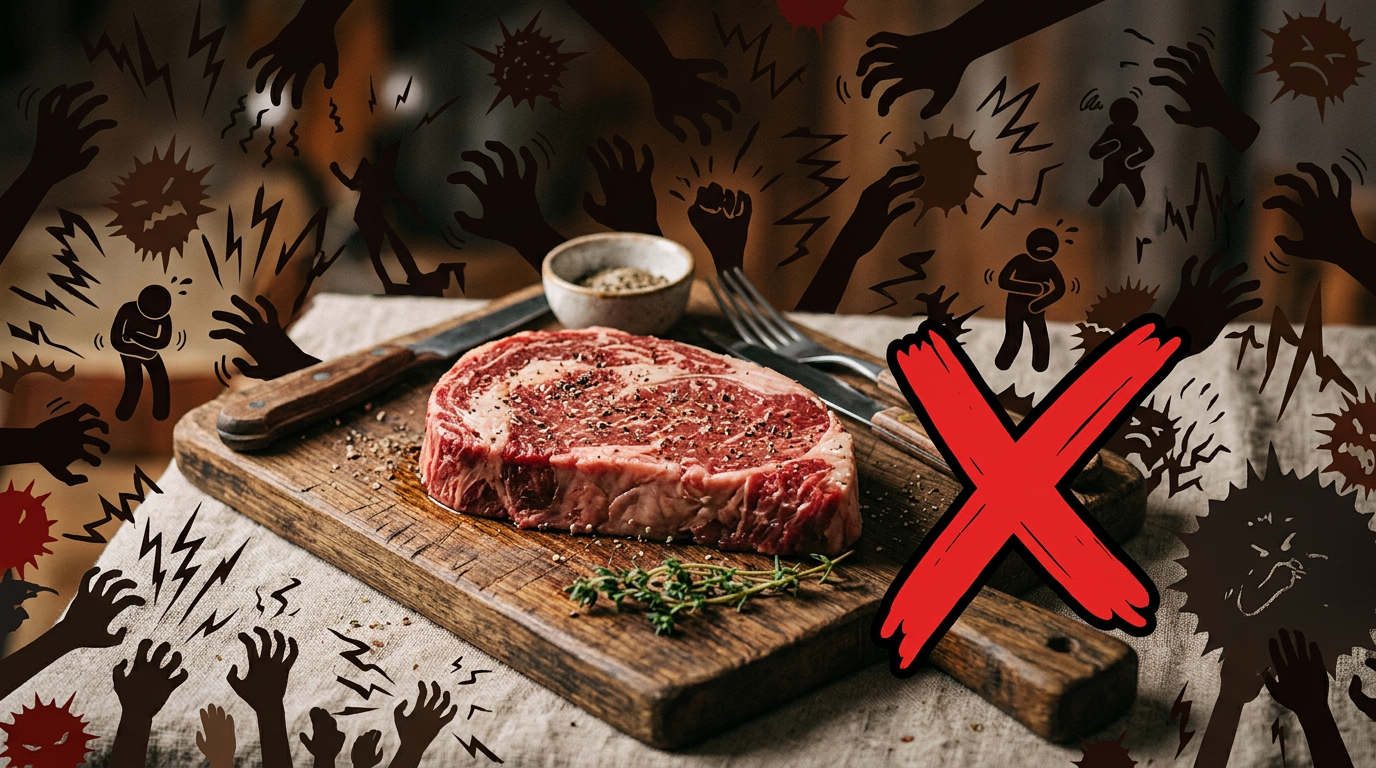

Researchers have identified a surprising link between this emerging allergy and ticks of the Amblyomma americanum species. Their bite can trigger a severe allergic reaction to red meat, and the number of cases is rising across Europe.
A growing number of people are reporting unusual symptoms after consuming red meat: tingling in the mouth and throat, severe skin rashes, and in some cases, breathing difficulties. This condition, known as alpha-gal syndrome, is an acquired allergy to mammalian meat, and experts warn that its incidence is increasing in Europe.
What is alpha-gal syndrome?
Alpha-gal syndrome is a severe allergy to galactose-alpha-1,3-galactose (alpha-gal), a complex sugar naturally present in mammalian meat (beef, pork, lamb, game). Unlike other food allergies, this is not a reaction to a protein but to a carbohydrate. What makes this allergy particularly unusual is that it appears suddenly in adulthood, even in people who have eaten red meat all their lives without any issues.
The tick – the unexpected culprit
The primary cause of this allergy is the bite of certain tick species, particularly the lone star tick (Amblyomma americanum), native to the United States, but also other European species. When a tick bites a human, it can introduce its saliva into the bloodstream, which also contains the alpha-gal sugar. The person’s immune system may recognize this molecule as foreign and develop antibodies (IgE) against it. Later, when the person eats red meat containing the same sugar, the body triggers an allergic reaction.
Symptoms and diagnosis
The symptoms of a meat allergy can vary and often appear several hours after a meal (3-6 hours), making the link to the consumed food more difficult to establish. Among the most common symptoms are:
- Tingling or itching in the mouth, throat, and ears
- Skin rashes (hives) or eczema
- Breathing difficulties
- Abdominal pain, nausea, diarrhea
- In severe cases, anaphylactic shock
Diagnosis is made through skin tests or specific blood tests that detect the presence of IgE antibodies against alpha-gal.
How to protect yourself
For people diagnosed with this allergy, the only solution is complete avoidance of red meat and products containing it. In severe cases, it may also be necessary to avoid certain medications or products containing gelatin or other animal derivatives. Prevention remains the best strategy: avoid tick bites by using repellents, wearing long-sleeved clothing in areas with tall grass, and carefully checking your body after walks in nature.
Conclusion
Alpha-gal syndrome is a fascinating example of how interactions between humans, animals, and the environment can lead to the emergence of new diseases. Although still relatively rare, the increasing number of cases reported in Europe underscores the importance of raising awareness about this allergy and its risk factors.




Lasă un răspuns